
The field guide · Moon
Why does a Blood Moon turn red?
“Blood Moon” commonly describes the reddish Moon during a total lunar eclipse. Earth blocks direct sunlight, while some light passing through its atmosphere still reaches the Moon. The name is a description of appearance, not a new lunar phase.
What happens during a total lunar eclipse?
At full Moon, a sufficiently close Sun–Earth–Moon alignment can carry the Moon through Earth’s shadow. Totality begins when the entire lunar disk enters the umbra, the shadow’s central region. Sunlight filtered through Earth’s atmosphere can still reach it; red and orange light survive the passage more readily than shorter wavelengths. NASA’s eclipse guide [1].
That reddish illumination is the origin of the popular Blood Moon label. The appearance is not a fixed colour swatch: atmospheric conditions influence what observers see.
Total, partial and penumbral: three cases
Swipe or use the arrow keys to see all columns.
| Eclipse type | What happens to the Moon |
|---|---|
| Total | The whole disk enters Earth’s umbra |
| Partial | Only part of the disk enters the umbra |
| Penumbral | The Moon passes through the lighter outer shadow; dimming can be subtle |
A partial eclipse is not an ordinary crescent phase. One involves Earth’s shadow; the other is the changing view of the Moon’s sunlit half. See the eight-phase guide for that monthly cycle.
Why not every full Moon?
The lunar orbit is tilted relative to Earth’s orbital plane. Most full Moons pass above or below the alignment needed for an eclipse. The fact that a Moon is full is necessary for a lunar eclipse, but it is not sufficient. NASA’s eclipse FAQ [2].
Can everyone see the same eclipse?
You need the Moon above your local horizon during the relevant part of the event. Weather can hide it, and a location may see only some stages. A headline with a worldwide event date is not a local visibility forecast.
A useful viewing note has four entries: location, local start time, the stage you expect to see, and whether the Moon will be above the horizon. Keep the original time zone when copying a schedule. Unlike solar viewing, looking directly at a lunar eclipse does not require special eye protection; do not transfer that statement to a solar eclipse.
Is every red Moon a Blood Moon?
Colour alone does not establish an eclipse. NASA’s FAQ [2] notes that a low Moon can also appear reddish because of its light’s path through the atmosphere. Check the event and image caption before naming it.
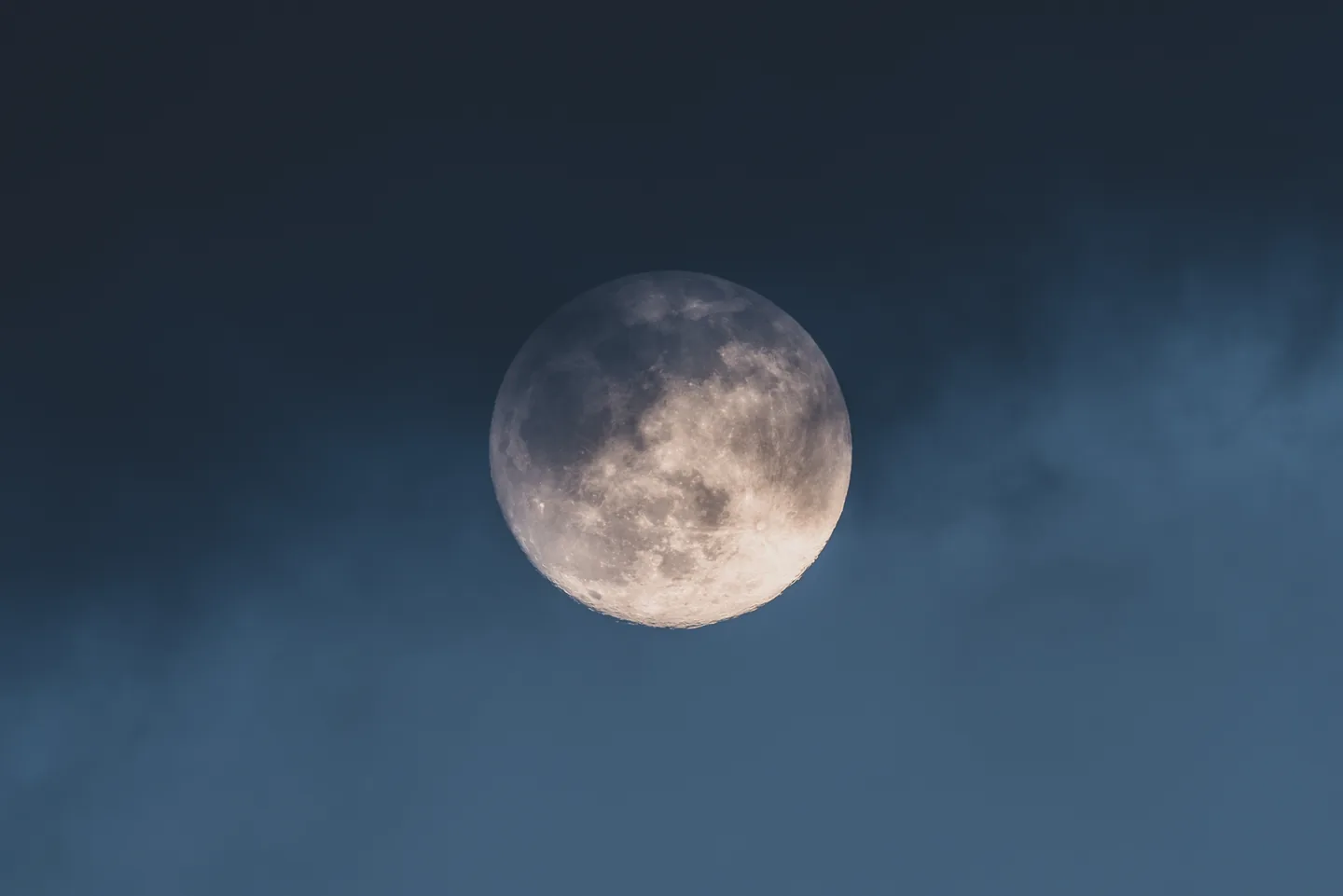
Our header photograph is a licensed illustration of the Moon, not an image of a documented total eclipse. A caption should tell you what an image actually represents.
What do the other names mean?
A supermoon concerns distance; a Blue Moon concerns a calendar convention; Wolf and Strawberry Moon are seasonal names. An eclipse can coincide with other labels without making those labels interchangeable.
The red appearance does not measure a personal health risk. For questions about your own sleep or mood, begin with the research guide, keeping astronomical observations separate from explanations of symptoms.
Sources
References in the text lead here. Original publications open in a new tab; this guide stays open.
- [1] NASA Science: lunar eclipse geometry, types and colour (opens in a new tab) Back to text ↑.
- [2] NASA: super Blood Moon questions, visibility and safe lunar viewing (opens in a new tab) First mention ↑.
A little context
Umbra
The central part of Earth’s shadow, where direct sunlight is blocked. A total lunar eclipse occurs when the whole Moon enters this region.
Keep exploring
Make room for your own observations.
Schumann Pulse brings environmental readings and your personal journal into one place. The app is coming soon for iPhone.
Explore the app