
The field guide · Moon
Full Moon names: a year of stories in the sky.
Wolf Moon, Strawberry Moon and Cold Moon are names attached to full Moons in a widely used English-language calendar. They describe seasonal associations and traditions, not different kinds of Moon. The names are not a single calendar shared by every culture.
See today’s Moon phase and the monthly calendar, with local event times and a hemisphere view.
The twelve names you are likely to see
This reference follows the familiar list presented by Royal Museums Greenwich [1]. Treat it as one naming convention, not a worldwide standard. The descriptive cues below are reminders of the names, not a forecast of local weather or wildlife.
Swipe or use the arrow keys to see all columns.
| Month | Familiar name | Seasonal cue in this naming tradition |
|---|---|---|
| January | Wolf Moon | Wolves and the winter landscape |
| February | Snow Moon | Winter snowfall |
| March | Worm Moon | Soil and the approach of spring |
| April | Pink Moon | Spring flowers, not pink moonlight |
| May | Flower Moon | Spring flowering |
| June | Strawberry Moon | Strawberry harvest |
| July | Buck Moon | Deer antlers |
| August | Sturgeon Moon | A fish associated with seasonal catches |
| September | Corn Moon | Harvest season; may also be Harvest Moon |
| October | Hunter’s Moon | Often the month of the full Moon after Harvest Moon |
| November | Beaver Moon | Beavers and preparations for winter |
| December | Cold Moon | The cold part of the year |
Harvest Moon and Hunter’s Moon follow a sequence
In the Northern Hemisphere convention, Harvest Moon is the full Moon nearest the autumnal equinox. That can put it in September or October. Hunter’s Moon follows it. These labels therefore need more care than a permanent “September equals Harvest” lookup.
NASA’s guide to full-Moon names [2] explains Harvest Moon alongside names based on other circumstances. A Blue Moon concerns calendar counting; a supermoon concerns distance; a Blood Moon concerns an eclipse. One event can acquire several labels, each answering a different question.
Does Strawberry Moon actually look pink?
The name alone tells you nothing about the colour in a photograph. Before interpreting a dramatic picture, check whether its caption identifies an eclipse, atmospheric conditions, an illustration or editing. “Strawberry” is not a scientific colour measurement.
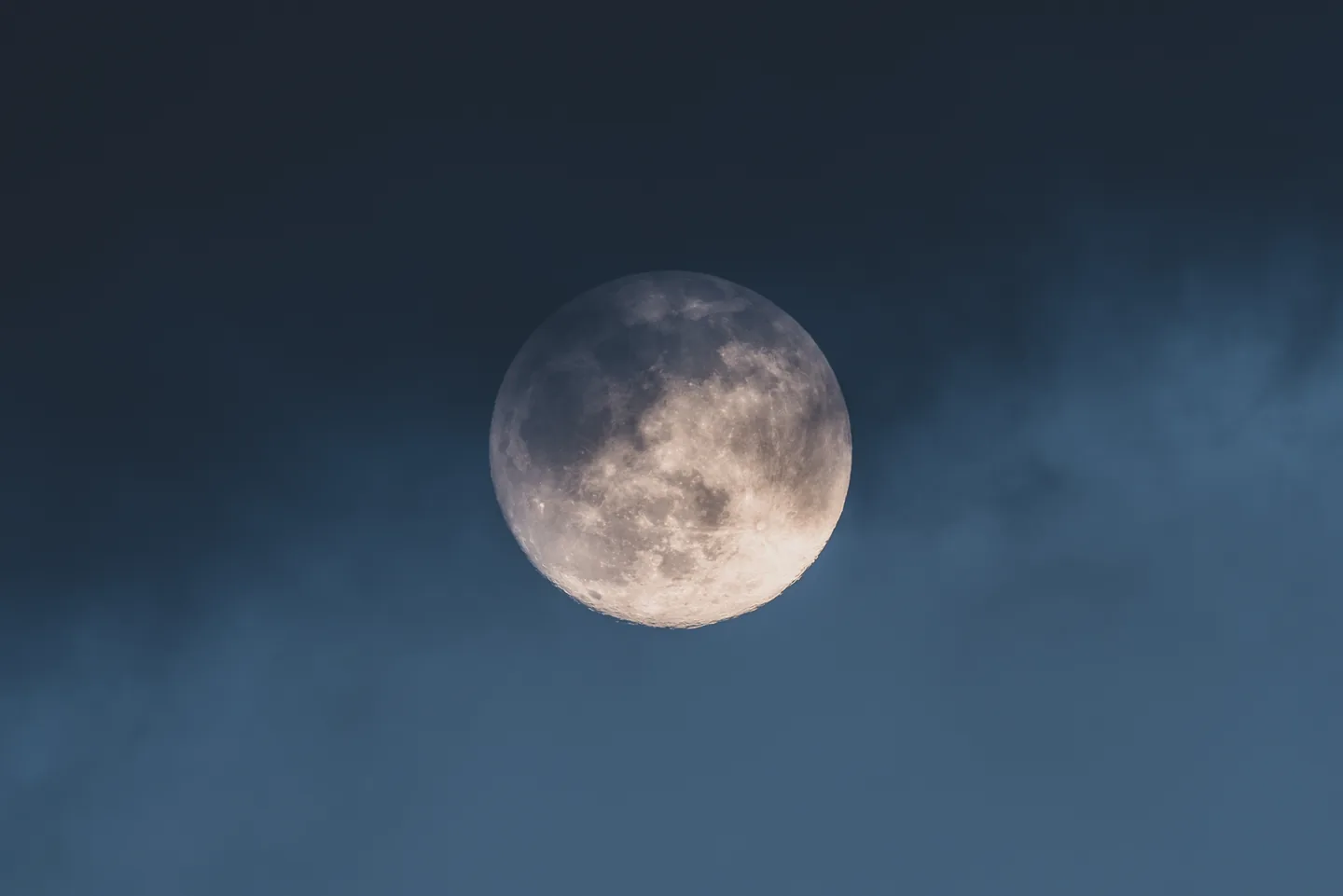
The photograph above is licensed illustrative photography. It is not a prediction of the next named Moon or evidence of its colour.
What about the Southern Hemisphere?
A northern seasonal name can appear in a southern news headline, but the local season may be the opposite. June in New Zealand is not the northern strawberry-growing season. Our hemisphere guide separates the shared astronomical phase from local seasons and viewing orientation.
Avoid fixing this by simply shifting every name six months. That would create a new editorial list, not document an established local tradition. If a calendar matters to a community, identify the community and use its own account.
Are there names for individual nights too?
Yes, but that is a different question from naming the year’s full Moons. Maramataka includes named nights in Māori lunar calendars, with local variation. Our guide to selected named nights identifies the source tradition for its examples.
For a numerical “day 5” or “day 15”, start with lunar age and lunar days. A day number needs a counting rule; it is not another full-Moon nickname.
Sources
References in the text lead here. Original publications open in a new tab; this guide stays open.
- [1] Royal Museums Greenwich: full Moon names throughout the year (opens in a new tab) Back to text ↑.
- [2] NASA Space Place: supermoon, Blood Moon, Blue Moon and Harvest Moon (opens in a new tab) Back to text ↑.
- [3] NASA Space Place: why Earth’s hemispheres have opposite seasons (opens in a new tab).
A little context
Equinox
One of the two times each year when the Sun crosses the celestial equator. The March and September equinoxes mark opposite seasons in Earth’s two hemispheres.
Read the full explanationA little context
Blue Moon
A calendar name with two conventions: the second full Moon in a calendar month, or the third of four full Moons in an astronomical season. It does not describe a blue colour.
Read the full explanationA little context
Maramataka
Māori systems for organizing time through the Moon and environmental observations. Names and practices vary by iwi, hapū and place; one published sequence is not a universal calendar.
Read the full explanationKeep exploring
Make room for your own observations.
Schumann Pulse brings environmental readings and your personal journal into one place. The app is coming soon for iPhone.
Explore the app