
The field guide · Wellbeing & evidence
Does a full Moon affect sleep?
Some studies report shorter or later sleep around the full Moon; others do not reproduce the effect. The evidence does not establish that a full Moon causes insomnia in everyone, or explain a particular bad night. A diary across ordinary nights and several lunar cycles is more useful than one coincidence.
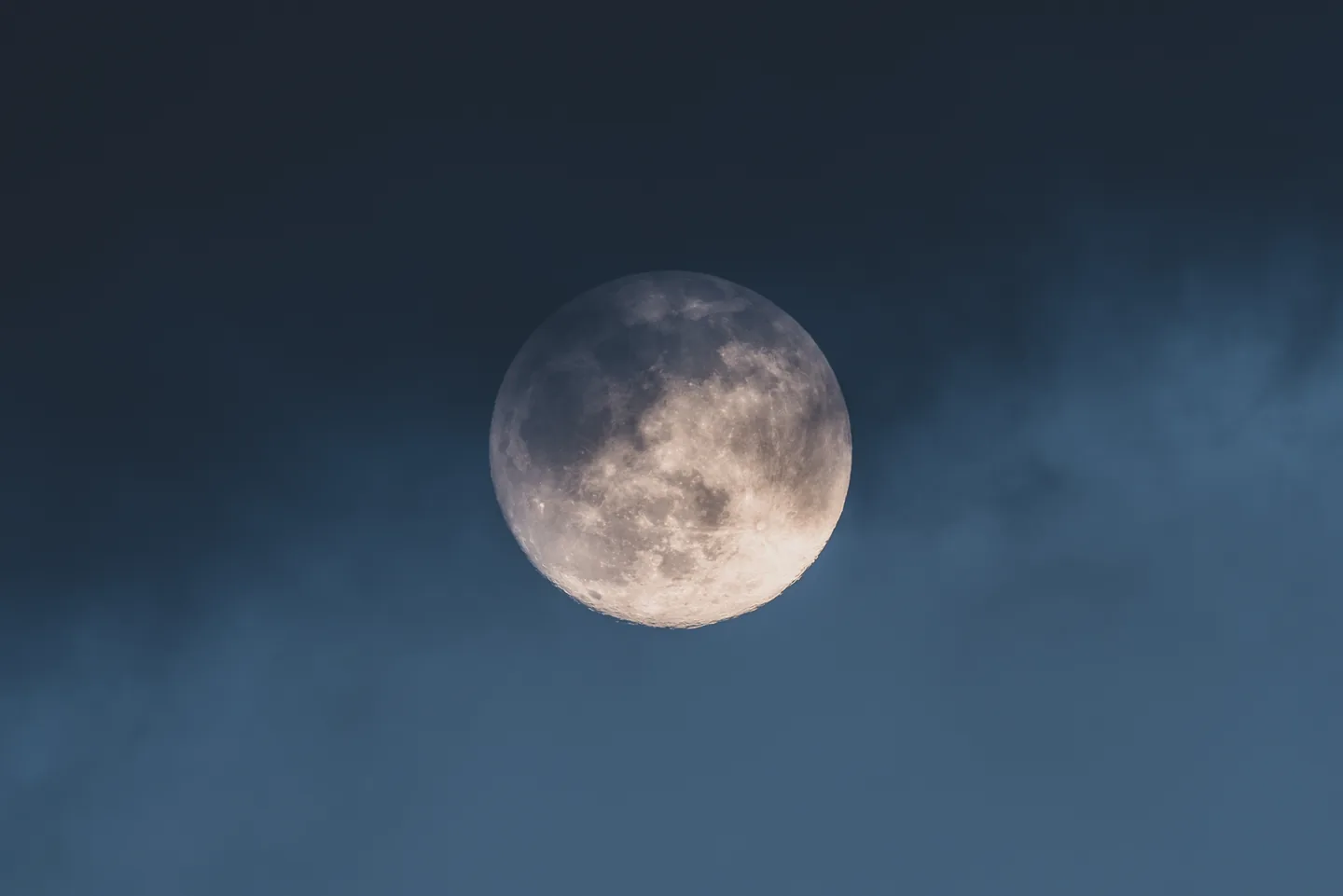
Why the research does not give one simple answer
“Full Moon insomnia” sounds like a single phenomenon. Studies actually ask different questions: how people sleep in a laboratory, when people go to bed at home, or how they remember their sleep. They also choose different windows around the full Moon. Those results cannot be treated as interchangeable measurements.
Three influential papers illustrate the disagreement:
Swipe or use the arrow keys to see all columns.
| Study | What the researchers found | What to keep in mind |
|---|---|---|
| Cajochen and colleagues, 2013 [1] | In a retrospective analysis of laboratory sleep, sleep duration was about 20 minutes shorter around the full Moon. | The lunar question was examined after the original experiment; it was not a personal prediction rule. |
| Cordi and colleagues, 2014 [2] | Three larger datasets did not reproduce the reported lunar sleep effects. | The authors raised publication bias: striking positive findings can receive more attention than null results. |
| Casiraghi and colleagues, 2021 [3] | Wrist activity recordings showed later and shorter sleep in the days before full Moon in studied communities. | The timing was before full Moon, and everyday field observations cannot isolate every possible explanation. |
The last study included communities in Argentina with different access to electricity and an urban US sample. Its findings make the question worth investigating. They do not settle whether an internal lunar rhythm, evening light, behavior or other factors explain every setting.
Is moonlight the same as a lunar effect?
No. Light entering your bedroom is an exposure you can describe; a date on a phase calendar is a time marker. A claim about light needs information about the room, curtains and time spent outdoors. A claim about an internal rhythm needs evidence beyond the calendar date alone.
The Moon's visible phases describe the portion of its sunlit surface we can see. A full Moon symbol does not tell us how bright your bedroom was or how much sleep you needed that night.
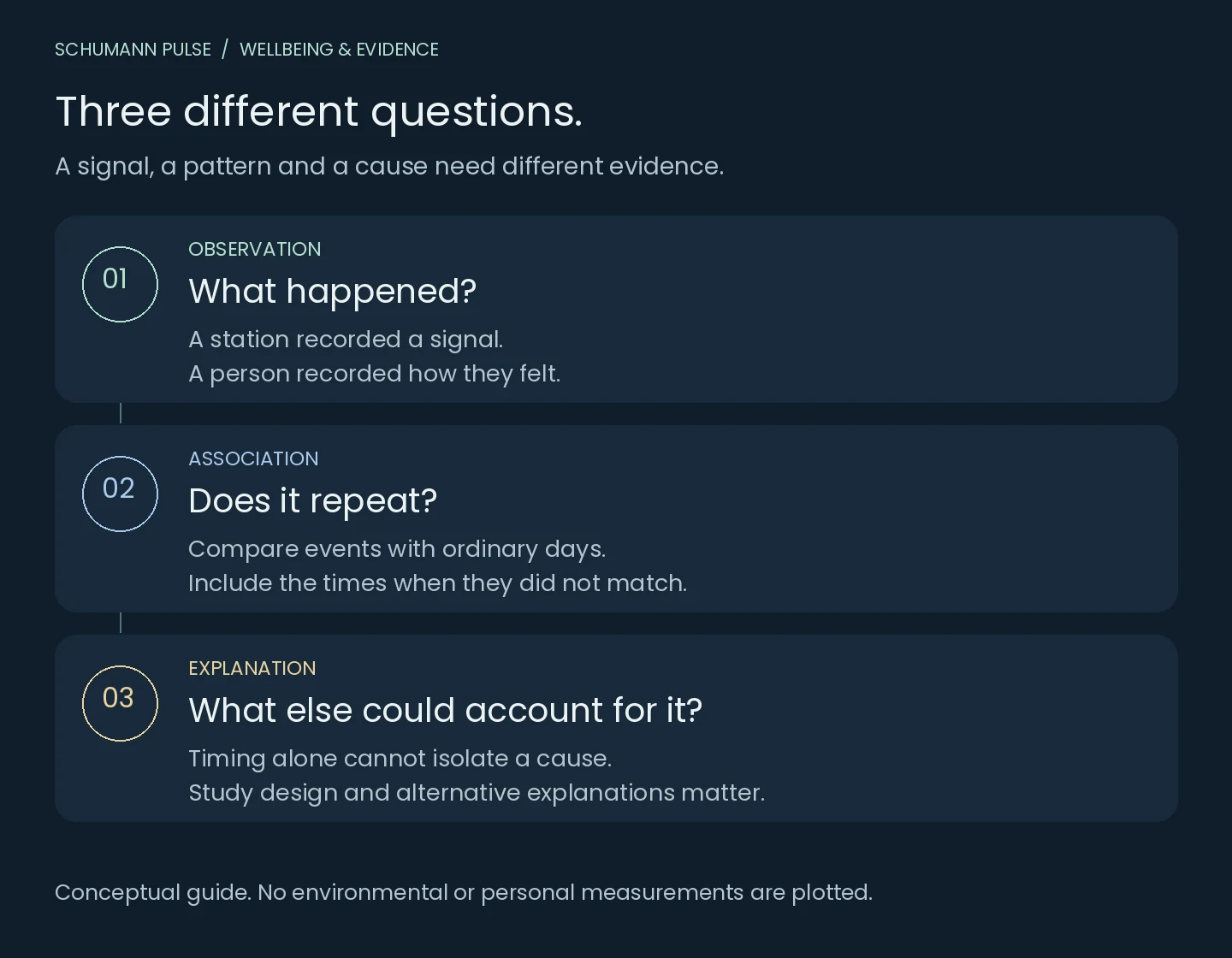 Open figure at full size ↗
Why can't I sleep tonight?
The Moon may be the most memorable thing about the evening, but it is not a diagnosis. Stress, caffeine, alcohol, shift work and an uncomfortable sleeping environment are among the common contributors. Our guide to insomnia explains what you can try, which approaches have evidence and when to seek help.
For a useful record, use our sleep diary guide and free blank template. Write down when you went to bed, roughly when you fell asleep, when you woke and how rested you feel. Add relevant context such as a late coffee or a changed work schedule. It is fine to estimate; mark an estimate as an estimate instead of turning it into an exact measurement.
Do not discard a bad night because it happened at new Moon, or a good night because it happened at full Moon. Both are essential to answering your question fairly.
How to compare your sleep with the lunar cycle
Choose one question before looking through your history: for example, “Is my sleep timing different in a defined window around full Moon?” Keep that window the same. Decide whether a night's label refers to bedtime or the following morning, particularly if you work nights or travel.
Record nights throughout the month. Several nights around one full Moon still represent only one lunar event; repeated cycles offer a more useful comparison. There is no universal number of diary entries that proves a lunar cause. Missing nights, changing schedules and irregular recording can limit the result even in a long diary.
Our personal tracking guide explains how to separate recording from interpretation. Schumann Pulse can place journal entries alongside lunar context; a comparison becomes available only when there is enough suitable history. It does not diagnose a sleep disorder.
When to focus on sleep care
Keep a regular rising time, make the room dark and quiet, and choose a calm wind-down activity. For persistent insomnia, general bedroom tips may not be enough: CBT-I is a recommended treatment for adults. If sleep trouble persists or makes daily life difficult, seek clinical advice. You do not need to establish a lunar pattern before asking for help.
For the related question about emotions, read does the Moon affect mood?. Sleep changes and mood changes are different outcomes and deserve separate records.
Sources
References in the text lead here. Original publications open in a new tab; this guide stays open.
- Cajochen et al. (2013), [1] Evidence that the lunar cycle influences human sleep (opens in a new tab) Back to text ↑, Current Biology. DOI: 10.1016/j.cub.2013.06.029.
- Cordi et al. (2014), [2] Lunar cycle effects on sleep and the file drawer problem (opens in a new tab) Back to text ↑, Current Biology.
- Casiraghi et al. (2021), [3] Moonstruck sleep: Synchronization of human sleep with the moon cycle under field conditions (opens in a new tab) Back to text ↑, Science Advances. DOI: 10.1126/sciadv.abe0465.
- Edinger et al. (2021), [4] AASM behavioral insomnia guideline (opens in a new tab), CBT-I recommendation.
- [5] NHS: Insomnia (opens in a new tab), practical guidance and when to seek care.
This is an editorial review of selected evidence, not a systematic review or a clinical assessment. See our health evidence standards.
Keep exploring
Make room for your own observations.
Schumann Pulse brings environmental readings and your personal journal into one place. The app is coming soon for iPhone.
Explore the app