
The field guide · Moon
What is a Blue Moon?
A Blue Moon usually means the second full Moon in one calendar month. A separate seasonal convention names the third full Moon in a season containing four. Neither definition requires the Moon to look blue.
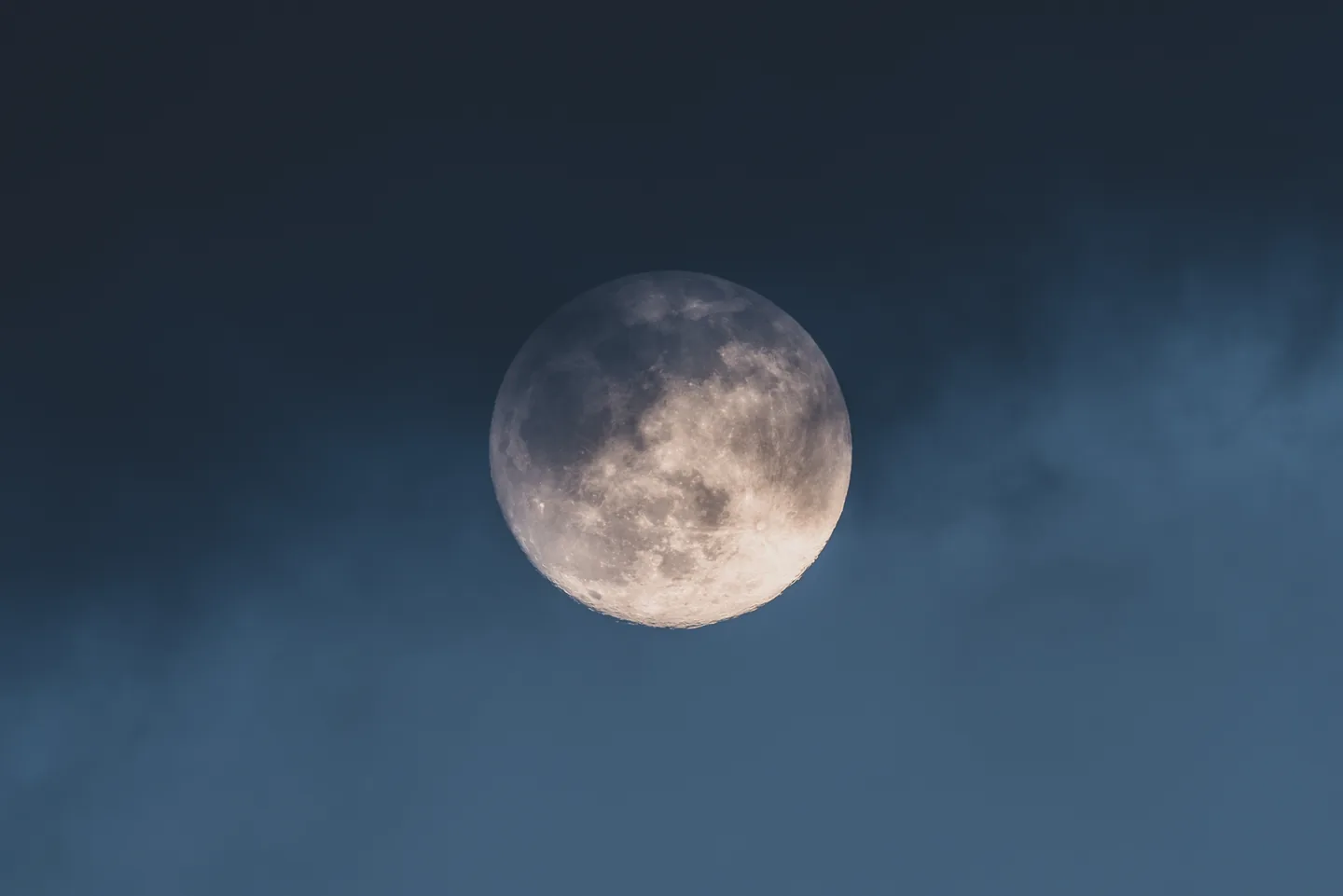
Two definitions, two different counts
The important word in a Blue Moon announcement is the convention. NASA’s explanation [1] distinguishes the monthly and seasonal meanings.
Swipe or use the arrow keys to see all columns.
| Convention | What to count | Which full Moon receives the name? |
|---|---|---|
| Monthly | Full Moons inside one civil calendar month | The second |
| Seasonal | Full Moons between astronomical season boundaries | The third, when there are four |
The seasonal version does not simply rename the fourth event. If two calendars disagree, first check whether one counts months and the other counts seasons.
How can two full Moons fit inside a month?
The repeating phase cycle, a synodic month, is shorter than most civil months. A full Moon near the beginning of a sufficiently long month can be followed by another near its end. February is too short to contain two full Moons. US Naval Observatory phase explanation [2].
A calendar is a set of boundaries placed over a continuous astronomical cycle. Changing the label does not add an extra physical phase between full Moon and waning gibbous.
Why a time zone matters
Consider an invented example: a full Moon occurs at 00:30 UTC on the first day of a month. At UTC−5, the local date is still the last day of the previous month. The event is the same, but the month used to count it has changed. This example illustrates calendar arithmetic; it is not a real dated prediction.
Before sharing a monthly Blue Moon date, keep the time zone with it. A good caption says which definition it uses and includes a dated phase time from the source. “Blue Moon tonight everywhere” leaves out information a reader needs.
Does it ever look blue?
The calendar name does not predict a blue disk. NASA’s Blue Moon FAQ [3] separates the label from unusual blue appearances caused by particular airborne particles. A blue-looking photograph is not sufficient evidence of a calendar Blue Moon.
Can it also be a supermoon or a Blood Moon?
Yes: these labels describe different properties. Supermoon refers to proximity around full Moon. Blood Moon commonly refers to the reddish appearance during a total lunar eclipse. Monthly names such as Wolf or Strawberry Moon add yet another naming layer.
For a diary, the ordinary date, time and phase are more useful than a stack of dramatic labels. If your question is about sleep, our full Moon and sleep guide examines the research separately from calendar terminology.
Sources
References in the text lead here. Original publications open in a new tab; this guide stays open.
- [1] NASA: monthly and seasonal Blue Moon conventions (opens in a new tab) Back to text ↑.
- [2] US Naval Observatory: Moon phases and the repeating cycle (opens in a new tab) Back to text ↑.
- [3] NASA: super Blue Moons, colour and overlapping labels (opens in a new tab) Back to text ↑.
A little context
Synodic month
The cycle from one new Moon to the next: about 29.53 days on average. Individual cycles vary, so a fixed interval is not an exact phase forecast.
Read the full explanationA little context
Waning
The visible illuminated fraction of the Moon is decreasing after full Moon, toward the next new Moon.
Read the full explanationKeep exploring
Make room for your own observations.
Schumann Pulse brings environmental readings and your personal journal into one place. The app is coming soon for iPhone.
Explore the app